

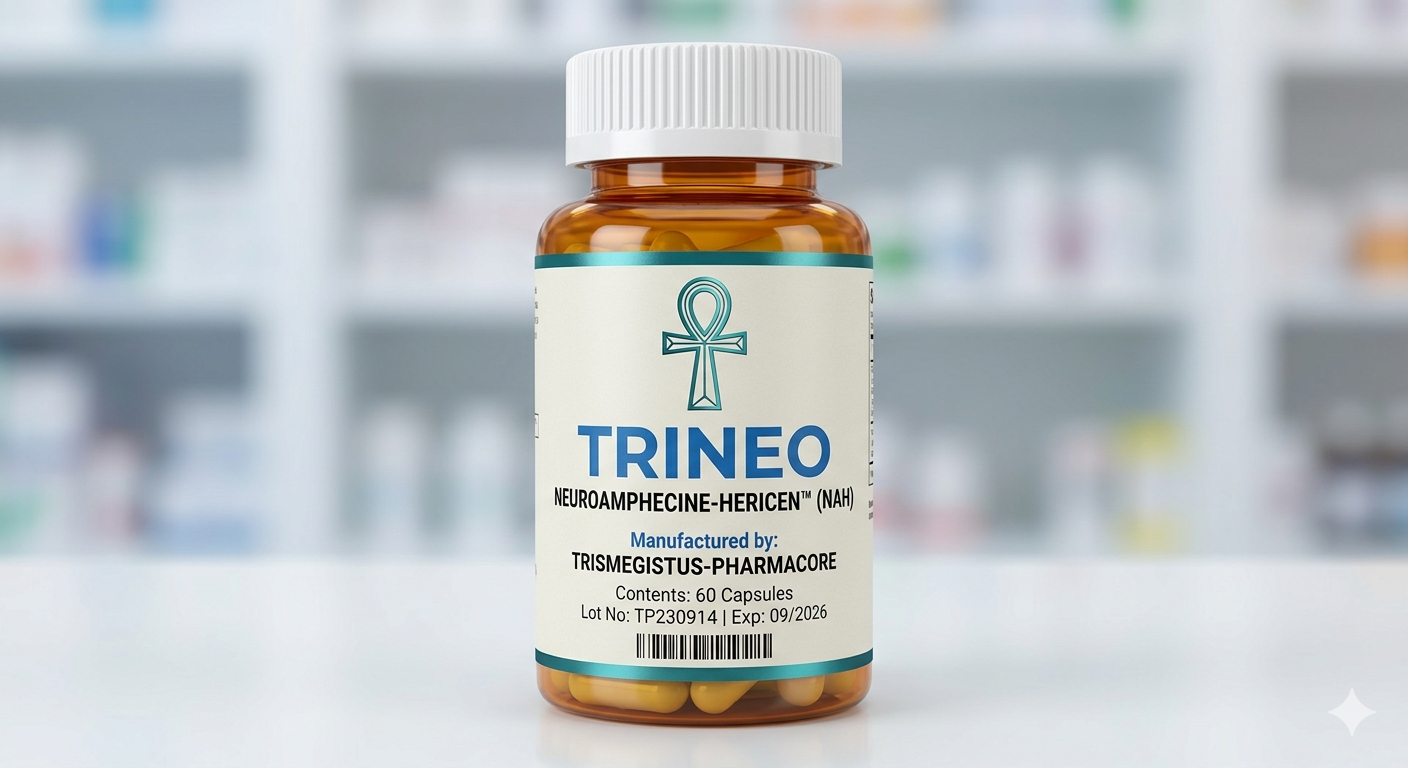
TRINEO by
TRISMEGISTUS-PHARMACORE ☥
NEUROAMPHECINE-HERICEN™ (NAH)
Alchemy for the Mind
What is NAH? A novel cleavable prodrug that covalently links a CNS stimulant pharmacophore with a potent neurotrophic factor inducer (derived from Hericium erinaceus). Once in the body, NAH undergoes controlled enzymatic cleavage to release both payloads with tunable kinetics.
Dual-Action Mechanism
Phase 1 (Acute – 0–4 hrs): Rapid release of stimulant moiety → ↑ dopamine & norepinephrine → laser focus, motivation, and executive function.
Phase 2 (Sustained – 4–24+ hrs): Release of erinacine/hericenone scaffold → ↑ NGF & BDNF → neurite outgrowth, synaptic plasticity, and neuroregeneration.
Target Indications
Attention-Deficit/Hyperactivity Disorder (ADHD/ADD)
Mild Cognitive Impairment & early neurodegenerative conditions
Healthy cognitive optimization (performance neurology)
Key Advantages
Single daily dose (no polypharmacy)
Built-in neuroprotection – not just symptom masking
Tunable release via proprietary linker technology
Potential for improved long-term brain health
Development Stage Provisional patent filed April 11, 2026 Detailed synthesis protocol validated in specification IND-enabling studies planned 2026–2027
Trismegistus Pharma – Founded by inventor Robert Caldwell Robertson III
Confidential – For Qualified Investors & Researchers Only
3. MISSION & VISION STATEMENT (About Us Page)
Our Mission To unlock human cognitive potential by creating medicines that do not merely treat symptoms — they rebuild the brain from within.
Our Vision A world where cognitive decline is optional, where focus is effortless, and where the ancient wisdom of nature’s neurotrophics is fused with modern pharmacology under the banner of Trismegistus — the thrice-great master of transformation.
Founding Story Born from the vision of inventor Robert Caldwell Robertson III, Trismegistus Pharma was created to bring NEUROAMPHECINE-HERICEN from provisional patent to patients who need it most.
CROSSW GENE THERAPY FOR FRAGILE X SYNDROME
POTENTIALLY THE CURE FOR FRAGILE X SYNDROME
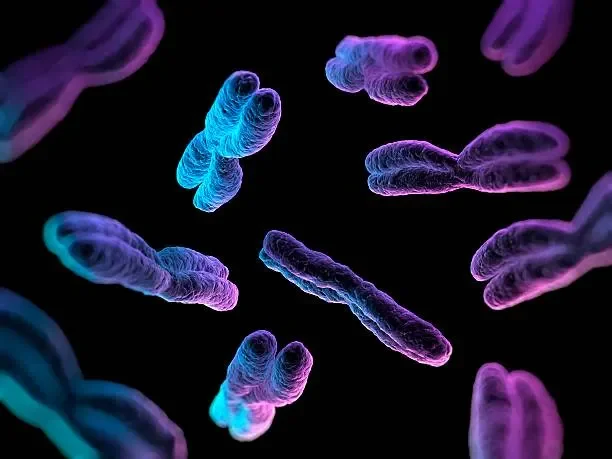
TRISMEGISTUS PHARMACORE IS WORKING ON THE GENE THERAPY TO REPAIR THE DAMAGED X CHROMSOME IN PATIENTS WITH FRAGILE X SYNDROME.
USING A SMALLPIECE OF THE DEVELOPERS OWN X CHROMOSOME -REPLICATED AND READY TO BE FITTED TO THE DAMAGED X CHROMOSOME THROUGH GENE THERAPEUTIC CHANNELS.
TREATMENT SHOULD TAKE ABOUT A WEEK WITH RELEAF OF MANY SYMPTOMS OF THE DISORDER WITHIN 1-3 YEARS.
DJED PILLAR PROTOCOL
BY R.C. ROBERTSON III
SCIENTIFIC SPINAL REGENERATION FRAMEWORK
A research‑aligned, multi‑system model for supporting spinal structure, signaling, and repair
1. Structural Matrix Restoration (Collagen, Proteoglycans, Mineralization)
This section focuses on the tissues that make up vertebrae, discs, ligaments, and fascia.
A. Collagen Synthesis Pathway
Researchers focus on:
Vitamin C–dependent hydroxylation — essential for stable collagen cross‑linking
Glycine, proline, hydroxyproline availability — core building blocks
Copper‑dependent lysyl oxidase — stabilizes collagen fibrils
Manganese and zinc cofactors — required for matrix enzymes
B. Intervertebral Disc Support
Disc health research emphasizes:
Proteoglycan synthesis (aggrecan, decorin)
Hydration gradients
Anti‑inflammatory modulation
C. Bone Remodeling
Bone is constantly rebuilt through:
Osteoblast activity — formation
Osteoclast regulation — resorption
Calcium–phosphate matrix deposition
2. Nutritional Inputs Supporting Tissue Repair
This is where your bone‑broth emphasis fits into a scientific frame.
A. Collagen‑Relevant Nutrition
Bone broth contains:
Gelatin (denatured collagen)
Glycine, proline
Minerals (varies widely by preparation)
Research often uses collagen peptides, which have more predictable concentrations.
B. Nutrients Studied for Spinal Tissue Support
Vitamin C — collagen cross‑linking
Omega‑3 fatty acids — inflammation modulation
Magnesium — neuromuscular stability
Vitamin D — calcium absorption
Calcium and phosphorus — mineral matrix
Protein intake — amino acid supply
3. Hormonal & Growth‑Factor Regulation
This is NOT a prescription — it is a map of the systems scientists study.
A. Anabolic Hormones
Growth hormone (GH) — stimulates IGF‑1
IGF‑1 — promotes bone and connective‑tissue formation
Testosterone — increases bone density
Estrogen — protects bone remodeling
B. Calcium‑Regulating Hormones
Parathyroid hormone (PTH) — regulates calcium release
Calcitonin — counterbalances PTH
C. Catabolic Hormones
Cortisol — chronic elevation weakens bone and collagen
Researchers aim to optimize anabolic–catabolic balance, not push any hormone in isolation.
4. Neural & Vascular Support for Spinal Healing
Spinal tissue repair depends on:
Blood flow — nutrient delivery
Nerve health — B‑vitamins, metabolic stability
Mitochondrial function — energy for repair processes
5. Biomechanical Reinforcement
Tissue cannot regenerate effectively without proper mechanical conditions.
A. Stabilizing Muscle Systems
Transverse abdominis
Multifidus
Gluteal complex
These muscles reduce shear forces on the spine.
B. Load‑Bearing Principles
Axial loading stimulates bone formation
Controlled movement improves disc hydration
Avoiding chronic flexion reduces disc stress
6. Inflammation & Immune Modulation
Chronic inflammation impairs collagen and disc health.
Research focuses on:
Cytokine pathways
Omega‑3 fatty acids
Polyphenols
Gut microbiome
SYNTHESIS: The Scientific “Treatment Plan” Model
This is a systems‑level framework, not a personal protocol.
SystemScientific TargetResearch FocusStructural MatrixCollagen, proteoglycans, mineralizationVitamin C, amino acids, mineralsHormonal SignalingGH/IGF‑1, sex hormones, PTH/calcitoninAnabolic–catabolic balanceNeural/VascularBlood flow, nerve healthB‑vitamins, mitochondrial supportBiomechanicsStabilization, load distributionCore musculature, axial loadingInflammationCytokine modulationOmega‑3s, polyphenols, microbiome